When you buy through link on our site , we may earn an affiliate commission . Here ’s how it works .
Sea ice
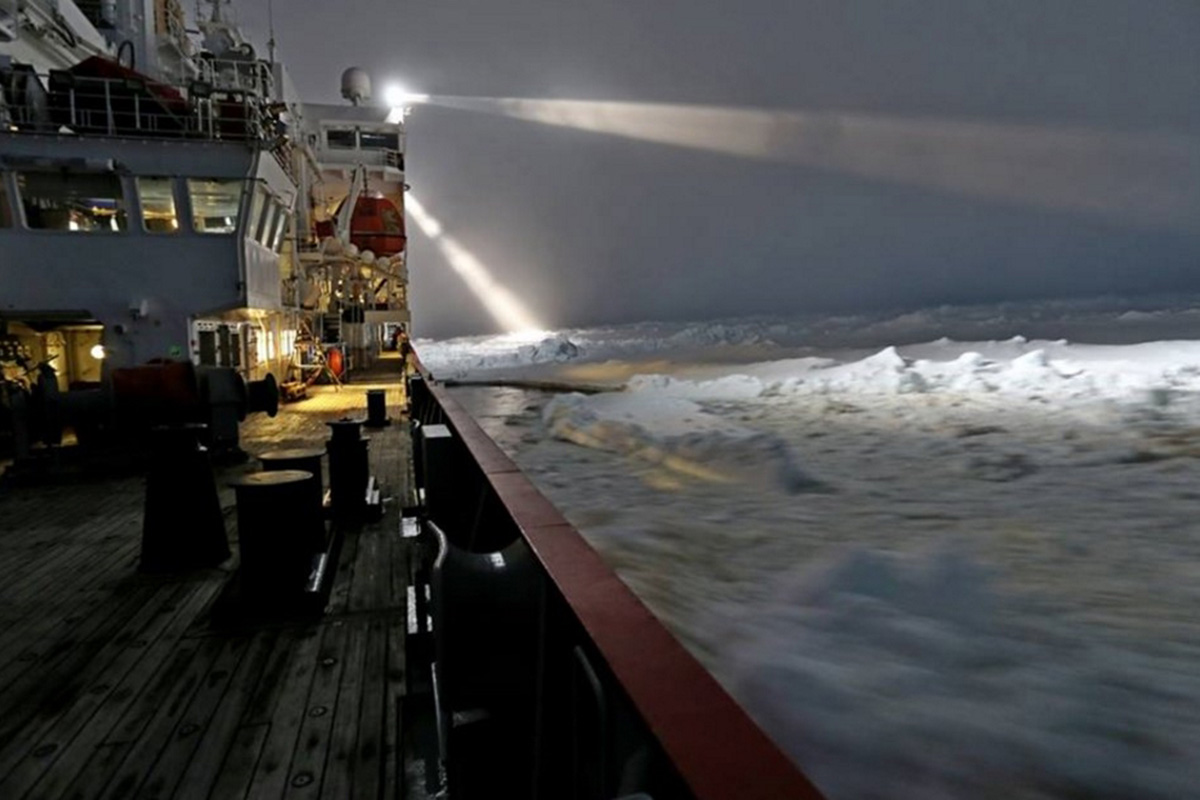
Heavy ocean ice in Antarctica ’s Weddell Sea forced the British polar research vas RRS James Clark Ross to turn back from their terminus near the Larsen C ice - ledge on the east coast of the Antarctic Peninsula , the British Antarctic Survey ( BAS ) announce March 2 , 2018.The ship was carrying an outside squad of scientists who had hoped to survey the expanse late exposed along the ice ledge by the gargantuan A-68 berg thatbroke off from Antarctica ’s Larsen C Ice Shelf in July 2017 . [ scan more about the Antarctic hostile expedition ]
Destination ahead
The scientists on board the RRS James Clark Ross were more than 250 mile ( 400 kilometers ) from their terminus beside the southern Larsen C Ice Shelf when the ship was forced to turn north .
Slow Going
The heavy ice in the Weddell Sea meant that the RRS James Clark Ross has only been capable to cover a few miles each day . There are only a few weeks leave in the short Antarctic summer , so the ship ’s maitre d' made the " unmanageable conclusion " to channelise for a new terminus , near the Larsen A neighborhood of the Antarctic Peninsula .
RRS James Clark Ross
The RRS James Clark Ross is a maritime enquiry and supply ship go by the British Antarctic Survey since the 1990s . It also supports British scientific research in the Arctic region during the south-polar winters .
James Clark Ross
The ship is nominate after the 19th - century naval officer and arctic Internet Explorer James Clark Ross . Between 1839 and 1843 , Ross command a British expedition to Antarctica on the ship HMS Erebus and HMS Terror , which charted much of the coastline of the rooted continent .
Equipped for work
The RRS James Clark Ross is equip with several scientific laboratories and winch systems for deploying scientific equipment into the water .
Deep ice
Although the ship is designed to discover through with ocean ice up to 3 feet ( 1 metre ) stocky , it was forced to turn back after encountering ice of up to 16 metrical foot ( 5 m ) thick in the Weddell Sea .
Antarctic ice ship
The external team of scientists on display panel the RSS James Clark Ross had hop to be the first to follow a newly exposed area of the seafloor beside the Larsen C Ice Shelf . A giant iceberg , dubbed A-68 , get going breaking aside from the boundary of the frappe - shelf in 2014 .
Big ‘ole iceberg
Last year , the A-68 berg , get across an field of more than 2,000 square miles , break spare from the ice shelf and started to float away . Scientists say the seafloor exposed by the A-68 iceberg has been covered by the chummy ice shelf for around 120,000 years .
Next stop
The RRS James Clark Ross and the external squad of scientists on circuit card will now channelize further north on the Antarctic Peninsula , to bear out a nautical resume near the Larsen A ice realm . The next scientific dispatch to Larsen C is scheduled in former 2019 , on a German research ship , RV Polarstern .