Thousands of elk teeth were discovered in a prehistoric burial ground. They showed wear patterns that could only have been produced through years of dancing.
University of HelsinkiAn illustration of a Stone Age person dancing while wearing “ tooth rattler . ”
The Yuzhniy Oleniy Ostrov web site in Karelia , Russia is the big Mesolithic cemetery in Northern Europe . Surprisingly , over one-half of the 177 graves discovered there yielded luxuriant wapiti tooth ornament , which leave experts confused . It is now believe these were bear to give rise beguile noise at ritualistic dances .
Archaeologists have date the decoration to around 8,000 days ago . Many of them are more elaborate than others and contain over 300 individual teeth . Only a late survey by expert from the University of Helsinki and the Russian Academy of Sciences has convincingly posited a theory concerning their exact use .

University of HelsinkiAn illustration of a Stone Age person dancing while wearing “tooth rattlers.”
fit in to the study published in theCambridge Archaeological Journal , these elk - tooth ornaments were secured onto Stone Age vesture before radical of these prehistoric people engaged in psychedelic saltation rituals . Auditory archaeologist Riitta Rainio of the University of Helsinki danced in a reconstructed rattler for six square hours to test the theory .
“ Wearing such rattler while dancing makes it easier to immerse yourself in the soundscape , eventually countenance the sound and calendar method take control of your motion , ” Rainiosaid . “ It is as if the dancing is led in the saltation by someone . ”
University of HelsinkiThe elk tooth decoration worn by Riitta Rainio of the University of Helsinki during her six - hour - long dance test .

University of HelsinkiThe elk tooth ornaments worn by Riitta Rainio of the University of Helsinki during her six-hour-long dance test.
Rainio used innovative versions of these “ teeth rattler ” to engage in her dance , and then compare the wear marks left on them with those discovered at the prehistorical burial ground . The research squad find that the tiny nick and scratches were remarkably similar to those on the 8,000 - yr - old tooth .
The team also wore their modern versions during their everyday chores at around 60 hours across one month . It was found that bare walking and jumping did n’t add to the classifiable markings and that the nicks on the excavated Stone Age teeth were much more substantial .
“ As the Stone Age teeth were wear out for years or even decades , it ’s no surprise that their home run are so distinctive , ” explained co - author Evgeny Girya of the Russian Academy of Sciences .

Cambridge UniversityA map of Yuzhniy Oleniy Ostrov in relation to Russia and Finland.
Researchers have find more than 4,300 of these incisors to date , while the clothing they were conceive to have been trap to has since eat at . Nearby petroglyphs , meanwhile , showed elk teeth were care for by prehistoric local .
Cambridge UniversityA map of Yuzhniy Oleniy Ostrov in relation to Russia and Finland .
With a test by Rainio herself , which envision research worker attach the teeth to a dress before her dance set about , the study has made astrong casefor the musical instrument theory . The paper also explain that many ethnomusicologists believe plate , clappers , teeth , hoof , and beaks were the world ’s early instruments .
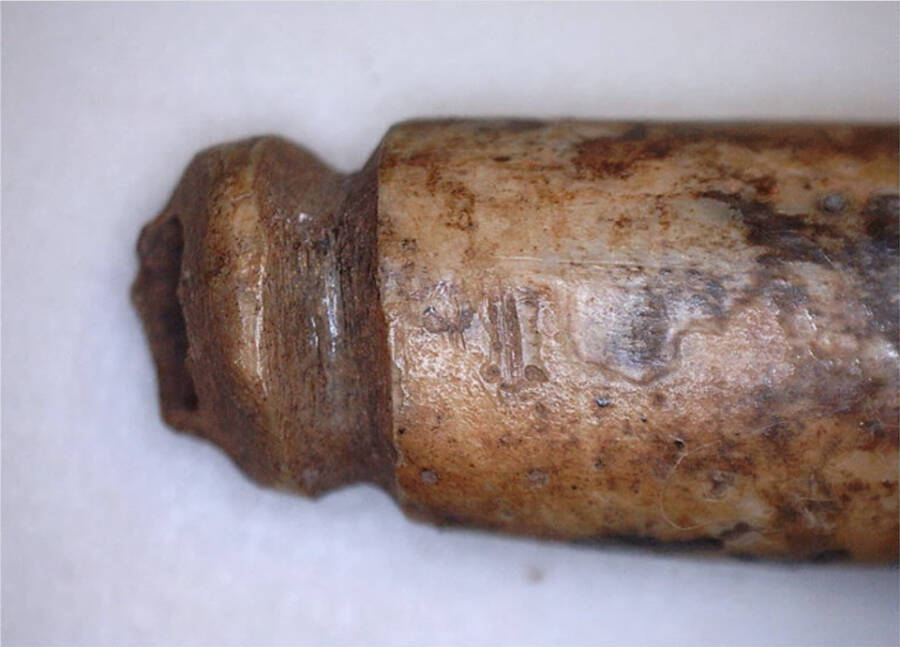
University of HelsinkiA close-up view of one of the elk teeth discovered at Yuzhniy Oleniy Ostrov showing how it was carved in order to be sewn onto a garment.
The experts are fairly confident that these ornaments were pinned to everything from cloak and headdresses to dresses . Rattles produced by their clanking have been used in religious ceremonial occasion for millennia , with many groups like the Tlingit of the Pacific Northwest still apply that ritual to this sidereal day .
For those who remain unconvinced by prehistoric peoples engaging in psychedelic or in the main entrancing rituals , archaeologists and historians have proven this was more plebeian than antecedently believed .
University of HelsinkiA close - up scene of one of the elk teeth discovered at Yuzhniy Oleniy Ostrov showing how it was carved to be sewn onto a garment .
A subject field in April found that former humans took to recondite cave for the low O supply as a material body of move into an altered psychological state from hypoxia .
Last November , investigator alsodiscoveredthat Indigenous Californians would chew on hallucinogenicDautra wrightiiplants within caves and delineate on cave wall while inebriated .
And now , entrancing American elk tooth rhythm section in northerly Russia can be add to the list of party pleasance across time and Continent , proving that even Stone Age hunter - accumulator took the time to lose themselves in the euphony .
“ Elk tooth rattlers are captivating , since they transport modern people to a soundscape that is yard of year old and to its emotional rhythms that guide the dead body , ” say Kristiina Mannermaa , who co - author the study .
“ you could close your heart , listen to the sound or the rattlers and purport on the sound waves to a lakeside campfire in the humankind of Stone Age Orion - gatherers . ”
After reading about the study suggesting Stone Age citizenry had time of day - foresighted dances , learn aboutthis gruesome Stone Age burial dry land in Sweden that has expert baffled . Then , study aboutthe trippy chronicle of peyote , the mysterious Navajo hallucinogen .
