As early as the 1940s, Pauli Murray began to challenge segregation, sex discrimination, and gender norms. She later became a pioneering lawyer and an Episcopal priest.
Pauli Murray defies categorization . A sound student , civil rights activist , women ’s activist , and poet — among other things — Murray ’s quick creative thinker and stubborn disposition arguably shift American club . Yet , most have never heard of her .
Born into sequestration at the dawn of the 20th one C , Murray spent her life “ with the single - apt intention of destroying Jim Crow . ” She also realise the intersectionality of adult female ’s progeny and polite rights issue and coined the term “ Jane Crow ” to describe her experience as a Black adult female .
Wikimedia CommonsIn add-on to being a civil right ’s militant and women ’s right ’s activist , Pauli Murray also became an Episcopal non-Christian priest .
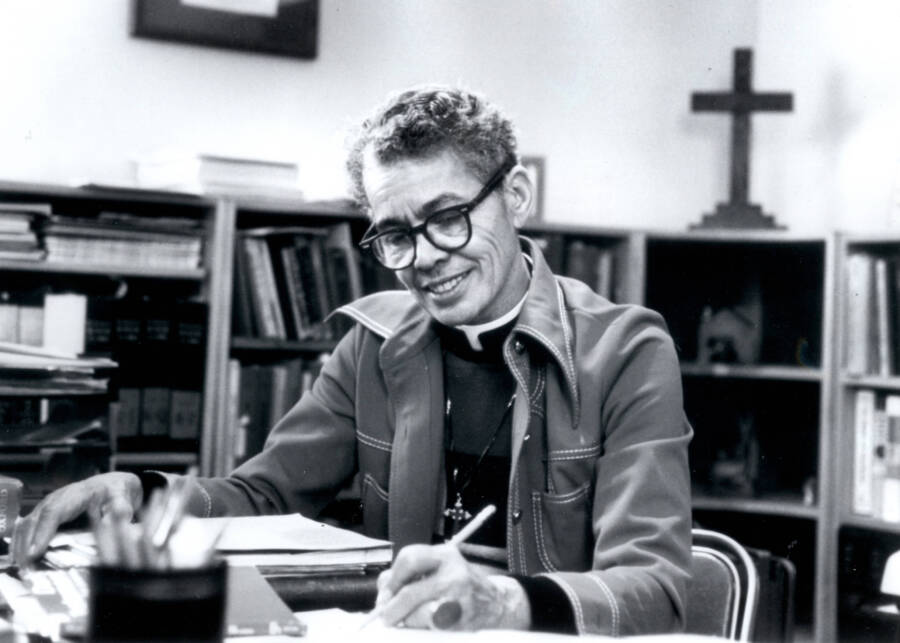
Wikimedia CommonsIn addition to being a civil right’s activist and women’s right’s activist, Pauli Murray also became an Episcopalian priest.
Behind her public image as a crusader for equal rightfield , however , Murray struggled in private with feelings that she should have been born a man . Though Murray lamented that her flurry sexuality identicalness hamper her , it arguably gave her a unique position on the complexness of the human term .
Her news report — like Murray herself — is intricate , inspiring , and desirable of attention . Though her bequest has long lingered in the shadow , this trailblazing American is finally getting her due .
How Anna Pauline Became ‘Pauli’ Murray
Born Anna Pauline on November 20 , 1910 , in Baltimore , Maryland , Murray came into a macrocosm full of contradictions . Her kinsfolk included formerly enslaved people , slave owners , and abolitionists who ’d oppose in the Civil War . As a result , Murray noted that her crime syndicate looked “ like a United Nations in miniature . ”
But her place in the world seemed bias . Jim Crow categorise Murray as “ colored . ” It did n’t take long for her to understand what that imply .
Schlesinger Library , Radcliffe Institute , Harvard University . Pauli Murray as a toddler with her family . After her parents died , an aunty raised her .
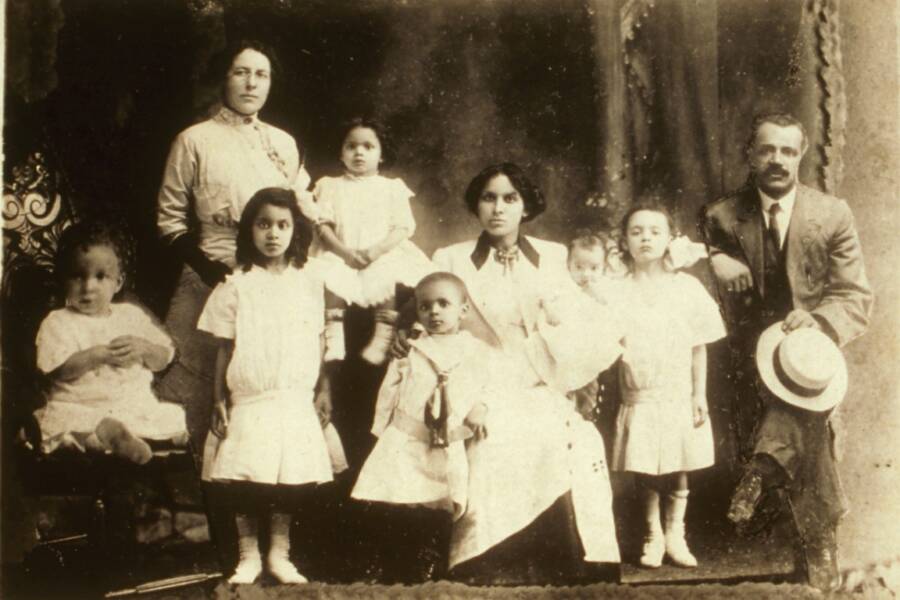
Schlesinger Library, Radcliffe Institute, Harvard University.Pauli Murray as a toddler with her family. After her parents died, an aunt raised her.
When Murray was just 3 years old , her mother Agnes suffered a massive cerebral hemorrhage and give out directly . Murray ’s begetter William — who struggled with depression and anxiety — was subsequently sent to the Crownsville State Hospital for the Negro Insane . There , a white guard beat him to death with a baseball game bat .
Murrayremembers her concluding glimpse of her forefather , his head “ divide open like a melon vine and sewed together loosely with scraggy stitch . ”
She grew up resenting Jim Crow . level-headed , motivated , and energetic , Murray walked everywhere to debar necessitate unintegrated buses . She refused to go to the movies because blackened people could only model in the balconies .
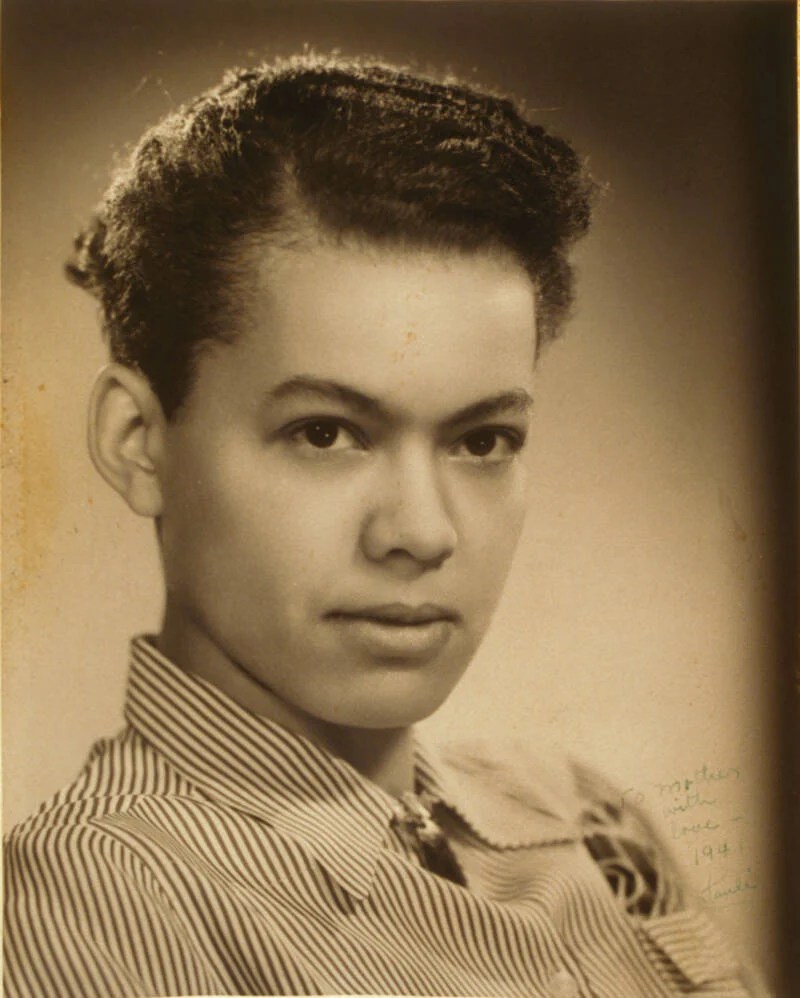
Schlesinger Library, Radcliffe Institute, Harvard UniversityPauli Murray in 1941.
Murray also begin to feel that another such division — manful and female — did n’t fit her . Much by and by in her life , Murray contemplate thatwhen God made her , “ maybe two got mix into one with parts of each sexual practice — virile heading and brain ( ? ) female - ish physical structure … ” She grew up with an aunt , who dear referred to her as a “ fiddling girl - boy . ”
As she came of age , Murray decided to escape southerly segregation . Instead of attending the North Carolina College for Negroes , Murray went north to New York City . Dismayed that her first - choice school Columbia did not take on women , Murray rather enter in the all - female Hunter College .
There , she began to explore her identity — both in terms of race and grammatical gender . Her proximity to Harlem disclose Murray to opprobrious image like Langston Hughes , W.E.B. Dubois , andMary McLeod Bethune . Murray also started going by “ Pauli ” for the first meter .
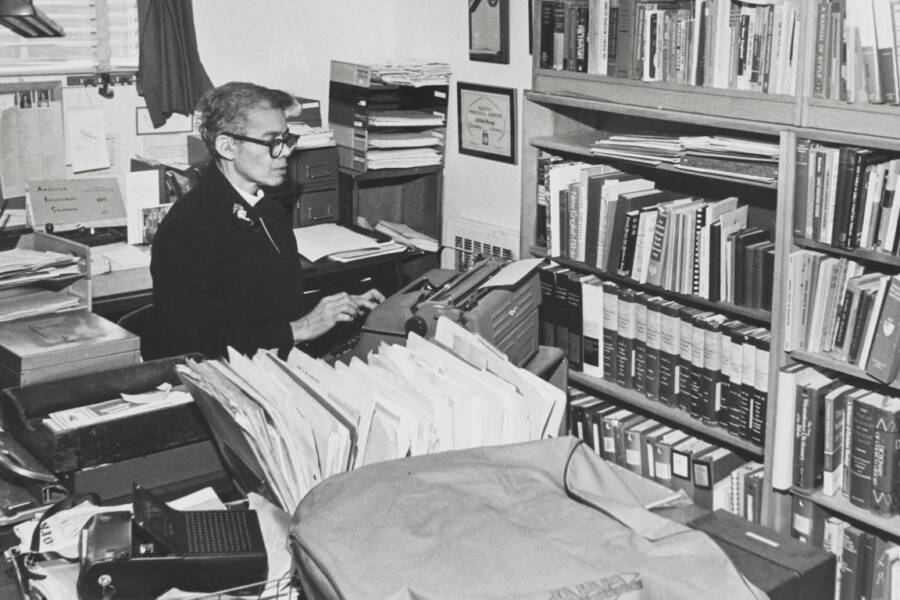
Smithsonian National Museum of African American History and CultureReverend Pauli Murray in her Virginia office.
But though these years offer Murray a luck to research her identity , they also gave her more question to consider . A short - lived marriage with a man led Murray to confront her sex heading - on .
“ Why is it when men hear to make dear to me , something in me fight ? ” she wondered . Questions like these followed Murray all her life . Arguably , they also inform her activism .
Pauli Murray’s Path Toward Activism
In the thirties , Pauli Murray fought on two fronts . Inwardly , she struggled to define her sexuality and gender . externally , she combat Jim Crow .
Schlesinger Library , Radcliffe Institute , Harvard UniversityPauli Murray in 1941 .
During that X , Pauli Murray fought for alteration in small-scale but significant ways . In 1938 , she defiantly utilize to the all - white University of North Carolina — and was flatly deny admission . In 1940 , she refused to move to the back of a bus in Virginia — 15 years before Rosa Parks did the same .
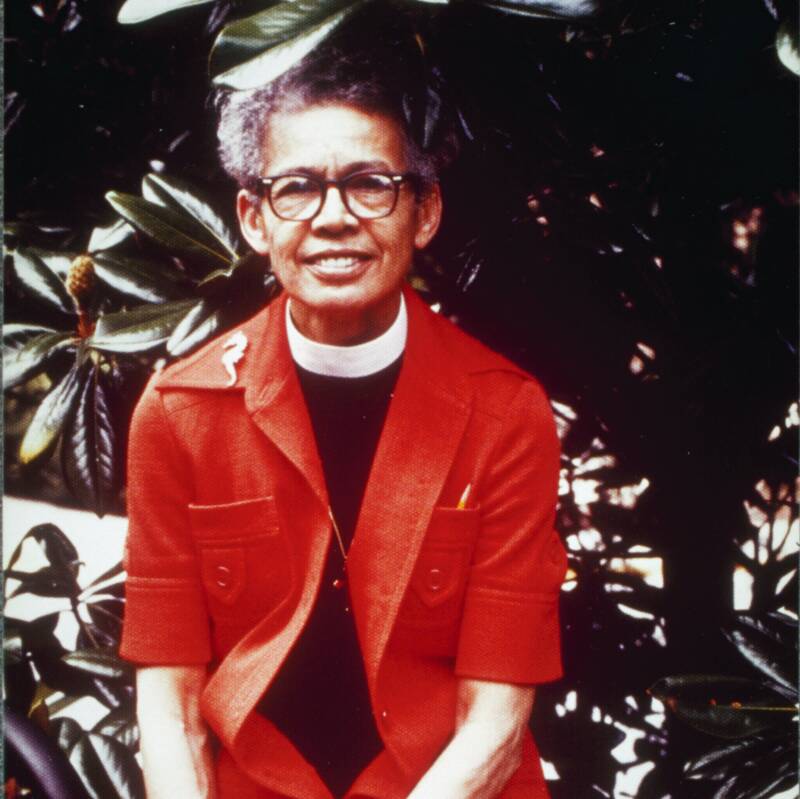
Schlesinger Library, Radcliffe Institute, Harvard UniversityPauli Murray spent her final years in the priesthood.
Murray ’s hardy stand roused the attention of the NAACP . But the judge in the case , skip to avoid a scandal , pay Murray a smack on the radiocarpal joint . He charged her with “ disturbing the repose ” and station her on her way .
But Murray kept shaking up the status quo . When a civil rights attorney advert Thurgood Marshall see her giving an fervent speech in defense of Odell Waller , a Black man on death row , the future Supreme Court Justice offered to write her a passport to his alma mater , Howard University .
Murray agreed to go . She go to legal philosophy schooltime with the commission to “ destroy Jim Crow . ”
At the same time , however , Murray could n’t destroy , subdue , or understand her own flavor about sexuality and sexuality .
To a doc in 1937,she wondered , “ Why do I prefer experimentation on the male side , instead of attempted adjustment as a normal woman ? ”
She even tried — and go bad — to get internal secretion therapy . Murray also had a doctor stop her internal secretion levels in Leslie Townes Hope of determine something off - kilter but everything was normal .
Despite her internal conflict , Murray come at Howard make up one’s mind to change the worldly concern . When a jurisprudence professorsniped on her first daythat “ he did n’t understand why a cleaning lady would want to go to law school , ” Murray furiously settle to become the school ’s top student .
And she did .
Paving The Way For Civil Rights And Women’s Rights
At Howard , Pauli Murray excelled . She presented bold , new legal theory that would eventually change secernment in the United States .
In 1944 , she suggested in division that lawyer looking to dismantlePlessy v. Ferguson — which lay the understructure for “ separate but equal ” segregation — had spent too long disputation against the “ equal ” nomenclature .
rather , suggest Murray , they should concentre on the “ freestanding . ” Murray ’s class fellow express joy , but she later sketched out her thinking in - depth for a paper . There , Murray explain howPlessy v. Fergusonviolated the 13th and fourteenth amendment .
Her disputation was so compelling that it stuck with her professor , Spottswood Robinson . When Robinson teamed up with Marshall to end schooling sequestration inBrown v. Board of Educationin 1954 , he cited Murray ’s work .
Their effectual team won that case — thanks to Murray ’s legal mind . She did n’t learn that Robinson and Marshall had used her parameter until 10 years later when she run into Robinson at a reunion .
Murray ’s sound scholarship also help turn the lunar time period for American women . When future Supreme Court Justice Ruth Bader Ginsburg argued that discrimination on the basis of sex was unconstitutional in 1971 , she relied on Murray ’s legal theory to make her case . Ginsburg , who later called Murray her “ legal hero , ” even cited her as a co - author .
Pauli Murray supported both motion in other ways , too . Upon graduation from the California Boalt School of Law , she produced a 700 - page tome on separatism after the Methodist Church ask her for a wide-eyed folder . Marshall later call in her work , States ’ Laws on Race and Color , “ the Holy Writ for polite rights lawyers . ”
And when Murray loudly enquire in 1965 if woman should have a “ March on Washington , ” just like Black Americans had in 1963 , she caught the eye of feminist Betty Friedan . The next twelvemonth , Murray , Friedan , and others found the National Organization of Women ( NOW ) .
Again and again , Murray pose down secernment in the United States . Her legal theories result in remarkable victory for woman and people of color . All the while , however , Murray continue to struggle with her own identity .
As she lament in her journal , “ This fight come up up to bump me down at every vertex I reach in my career . ”
In 1942 , Murray had reached out to a doctor who ’d proffer testosterone to effeminate men in hopes that he ’d do the same for her . “ Anything you’re able to do to help me will be gratefully appreciated,”Murray wrote , “ because my spirit is fairly unbearable in its present phase . ”
Murray contribute : “ Motivated to seek help on a longstanding aroused and mental conflict , popularly roll in the hay as homosexuality . ”
And when Harvard Law School rule out Murray on story of her sexual practice in 1944 , Murray tellingly reply :
“ gentleman , I would gladly vary my sex to fit your necessary . but since the way to such variety has not been revealed to me , I have no resort but to appeal to you to deepen your mind on this subject . Are you to tell me that one is as difficult as the other ? ”
When Murray sat down to write her autobiography , Song In A Weary Throat , which was print posthumously in 1987 , she even scrubbed her life-time of all same - sex kinship . She line her life cooperator Irene Barlow as her “ closest protagonist . ”
peradventure Murray did n’t need to reap care to that part of her life . Or maybe she want to — ultimately — control her own narration .
Pauli Murray’s Breaks Barriers In The Episcopal Priesthood
By 1973 , Pauli Murray had been press herself and secernment for her entire life . That year , she traumatise many when she announce that she ’d bequeath her tenured position at Brandeis , and become an Episcopal priest .
Smithsonian National Museum of African American History and CultureReverend Pauli Murray in her Virginia office .
Murray took this stone’s throw for a number of possible reasons . First of all , she ’d grown weary of both the civic rights movement and the woman ’s movement .
She had coined the term “ Jane Crow ” to describe how they overlapped . Yet civic rights leader persistently sidelined cleaning woman , and the women ’s trend dismissed the concerns of people of coloring .
secondly , her partner of 16 years , Barlow , had died , and Murray was awash in grief . Third , becoming a priest gave Murray a luck — in the opinion of her biographer , Rosalind Rosenberg — to express herself publicly “ as more manly than female . ”
Then again , Murray may have furrow the priesthood for the same rationality why she fought so firmly against discrimination . People said she could n’t do it . No adult female had ever become a priest in the Episcopal Christian church before .
But the meter she fine-tune in 1977 , the church service had indeed changed their policy — and Murray became a priest . She spent the rest of her life story in the priesthood before dying of Crab in 1985 .
Schlesinger Library , Radcliffe Institute , Harvard UniversityPauli Murray spent her final years in the priesthood .
Although Murray ’s sound learnedness transformed America , she has since vanished from the chronicle books . Her piece of work helped terminate legal favoritism for women and hoi polloi of color , and yet she ’s rarely cited as an influential activist in the clay sculpture of Martin Luther King Jr. or Betty Friedan . Why ?
Judith Cohen and Betsy West , who co - farm the documentaryMy Name Is Pauli Murray , meditate that Murray purposefully stayed on the sidelines . Being a female - incarnate soul who romantically pursued cleaning lady could be determinantal to her work , in the sentence that she last .
Though question of gender , pronouns , and gender are openly discussed today , Murray had to fight in the dark . When she tried to learn about other people who matte the way she did , Murray had to expect through the “ intimate deviation ” section of the New York Public Library .
Rosenberg believes , however , that Murray ’s secret struggle helped inform her public activism . Her questions about herself made her believe that sex and backwash are social constructs and caused Murray to be “ increasingly critical of boundaries . ”
She might have lived a different life sentence today . Murray , and her family , used she / her / hers pronouns . But other scholarly person have argued that Murray might better be described as “ they . ” Rosenberg even calls Murray trans , a label that did n’t exist for much of her life .
“ I do remember it ’s important to not confine Pauli to the time Pauli was living,”noted Talleah Bridges McMahon , a manufacturer in the infotainment .
In many ways , however , Murray never confined herself to the meter she lived in . Though Murray combat with her sexuality identicalness her entire life , she envisioned a more equal earthly concern . And she see it crest into fruition .
“ What I say very often , ” Murray once said , with a grinning , “ is that I ’ve dwell to see my bemused causes get hold . ”
After reading about the remarkable life of Pauli Murray , learn aboutJoan Trumpauer Mulholland , the fearless civil right wing militant . Or , look through these inspiringphotos of the 1963 March on Washington .
